



|
|
|
|
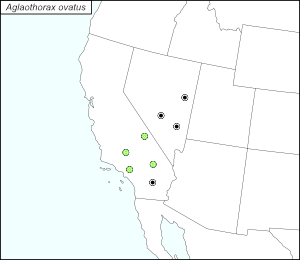
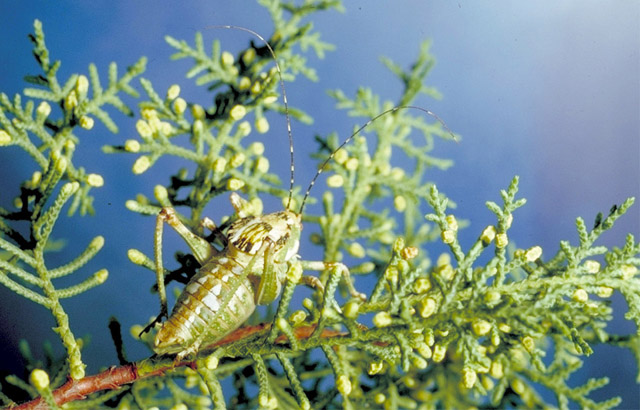
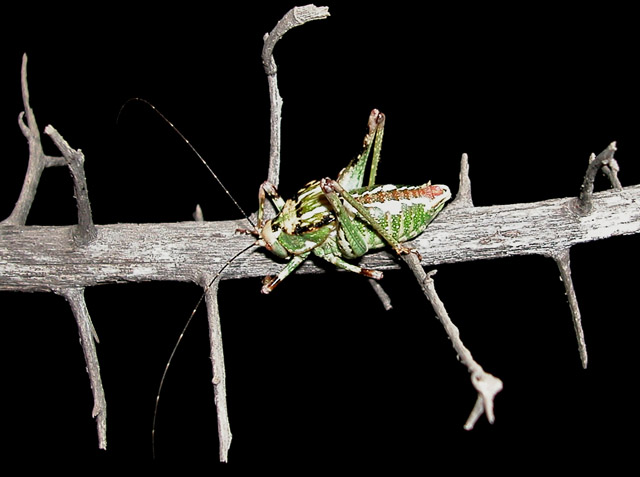
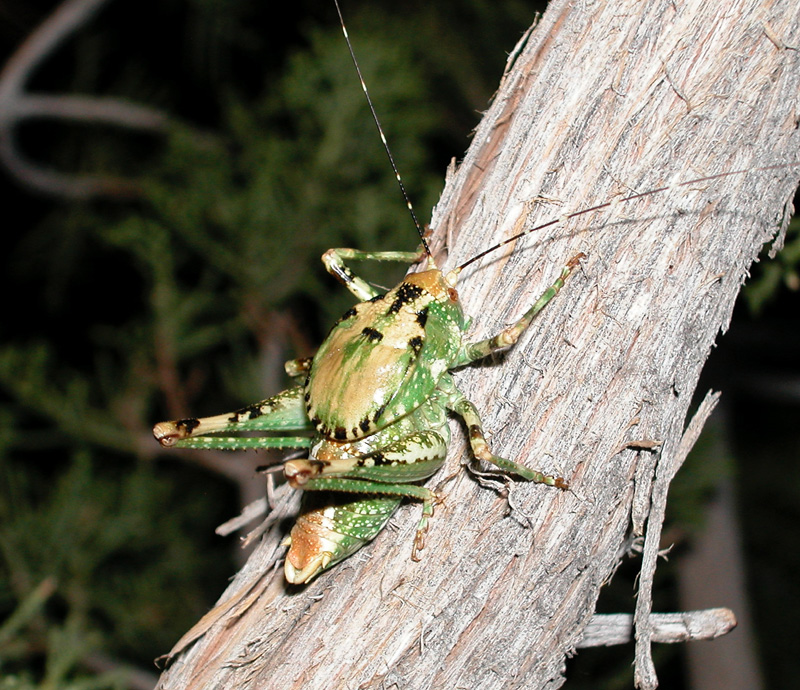
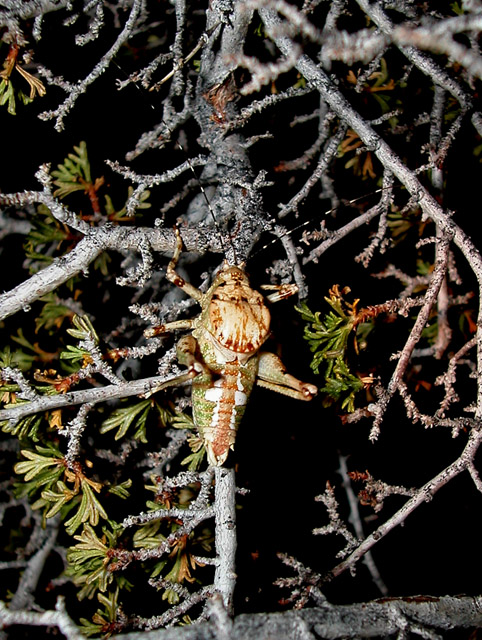
| map | male (o. ovata) | male (o. ovata) | male (o. tinkhamorum) |
|
|
|
|
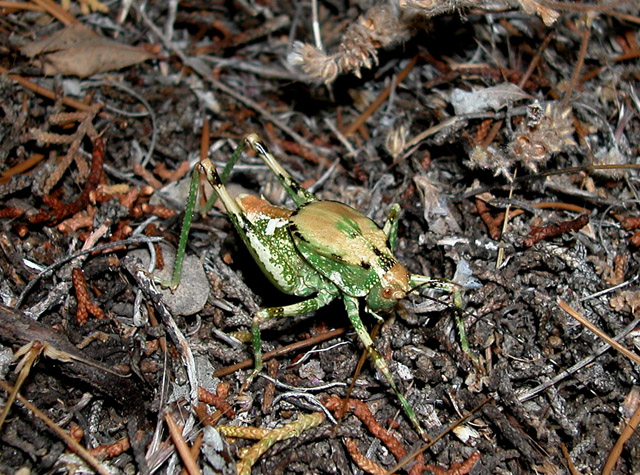
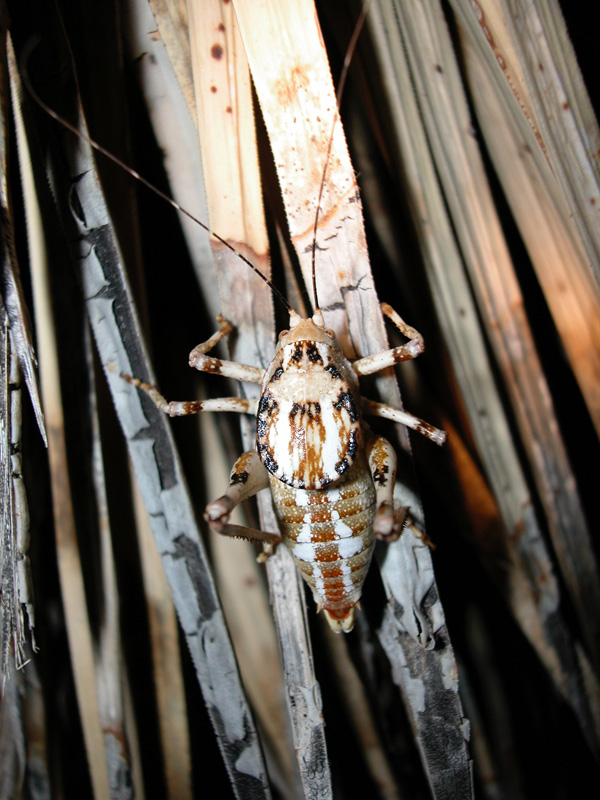
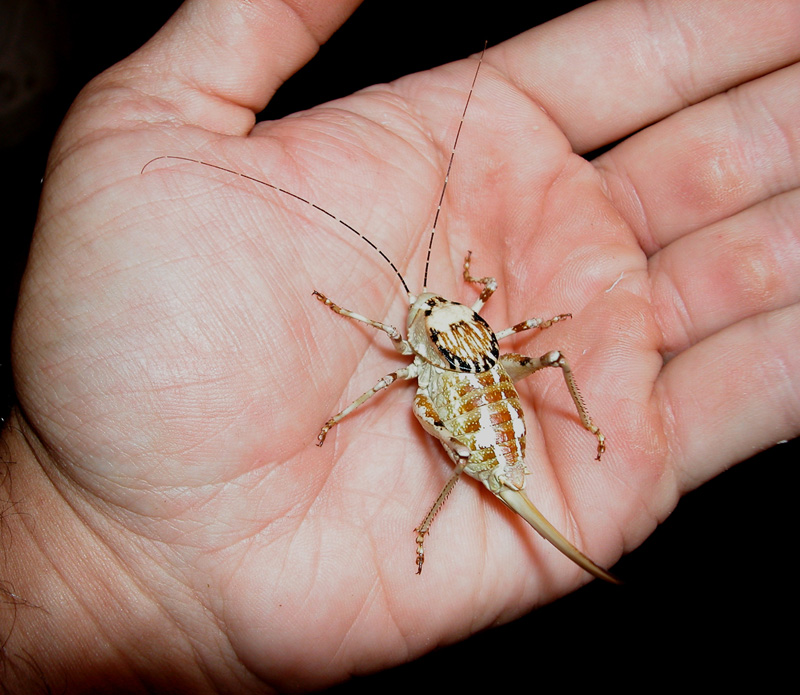
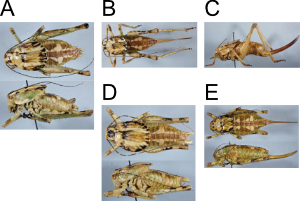
| male (o. tinkhamorum) | male (o. gigantea) | male (o. longicauda) | female (o. longicauda) |
|
|
|
|
| male |




| Group species: | Ovatus. |
| Song: | Loud, incessant song with frequently produced echemes (“chirps”). The calling song was onomatopoeically described as “zic-zic-zic, zic-zic-zic-zic” (Tinkham 1944) which corresponds to one 3 and one 4 pulse train echeme, respectively. Pulse trains 80±20 ms in length repeat at a rate of 9.16±0.96 s-1. Mean peak frequency is 14.13±3.02 kHz, with ultrasonic peak frequencies as high as 23.75 kHz. Variable length echemes group on average 6±11 pulse trains. Males tend to begin a bout of singing with isolated pulse trains and add pulse trains to echemes as singing continues. In rare circumstances males may produce large numbers of pulse trains in an echeme, such as after separating from a female post-mating. The maximum pulse train number observed in an echeme is 106. Echemes are repeated frequently, being separated by 1–5 s (mean 1.87±0.79 s) silent intervals. Males may produce irregular bouts of song at dusk. Males are alternating chorusers. |
| Identification: |
Coloration
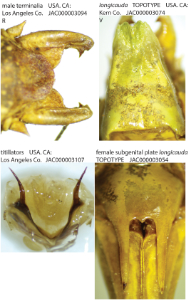
Ground color A. ovatus, most often green but also may be tan or light brown. A. gurneyi, always wood brown. Abdomen A. ovatus, dorsal, longitudinal reddish stripe. A. gurneyi, lacks a dorsal reddish stripe. Tegmina A. ovatus, white. A. gurneyi, brown. Pronotum and pronotal disk A. ovatus, pronotum has broad longitudinal white stripes and fine brown stripes on the disk. A. armiger and A. tinkhamorum, center of the pronotal disk is largely unmarked. All other Ovatus Group species, at most only fine black streaks on the pronotal disk. Morphology Male paraproct processes A. ovatus, subapical, ventrally directed heavy tooth. A. segnis and A. strobilion, apical tooth and slender processes. Prozona A. ovatus, not heavily rugose. A. giganteus, heavily rugose. Ovipositor A. ovatus, typically longer than the hind femur. All other Ovatus Group species, ovipositor is shorter than the hind femur. See Key to Aglaothorax species. |
| Range: | Found widely but locally across the Mojave Desert of California. |
| Habitat: | Creosote desert, pinyon-juniper, and Joshua tree woodlands. On California juniper (Juniperus californica), Mormon tea (Ephedra spp.), creosote bush (Larrea tridentata), cholla (Opuntia spp.), and Joshua Tree (Yucca brevifoli). |
| Season: | Spring into fall. |
| References: |
Cole et al. 2025
Cole et al. 2025 (Ovatus Group) pp. 16-38 Cole et al. 2025 (species pages) pp. 17 and 19-22 Tinkham 1944 |
| Nomenclature: | OSF (Orthoptera Species File Online). |

|

|