



|
|
|
|
| map | type page | id page |
| Group species: | Morsei. |
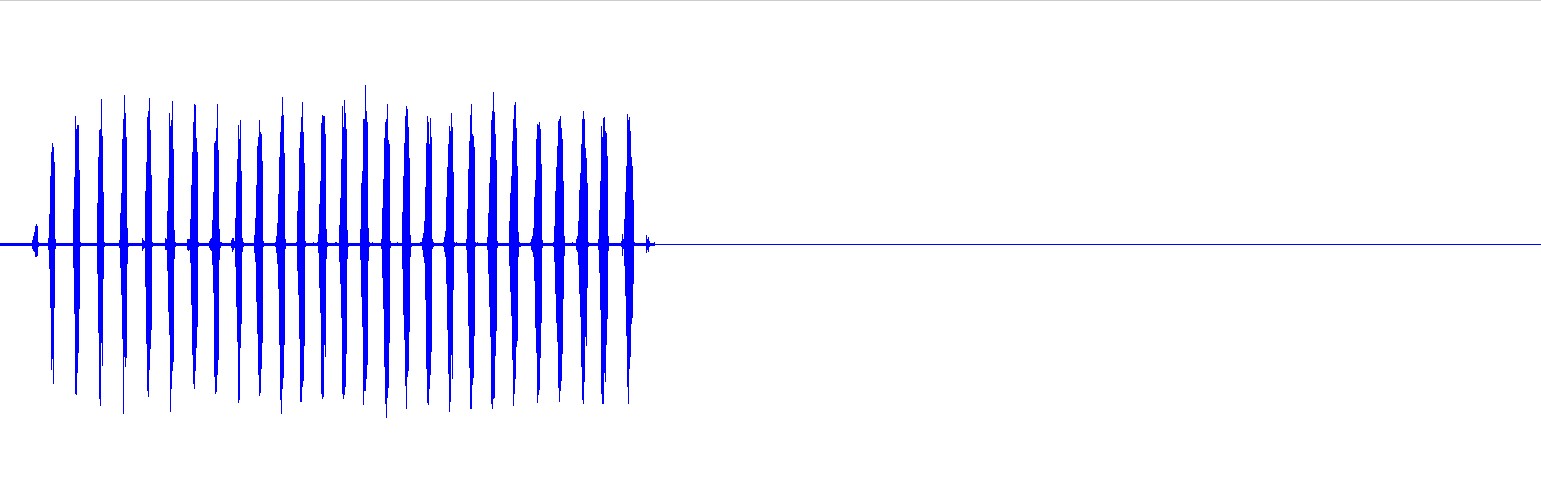
| Song: | Pulse trains are slow enough to be counted by ear. Pulse trains 60±20 ms in length are produced at a rate of 6.43±1.16 s-1. Mean peak frequency 19.31±5.64 kHz, ranging as high as 27.10 kHz. Echemes consist of 22±9 pulse trains repeated at a rate of 10–20 min-1. |
| Identification: |
Morphology
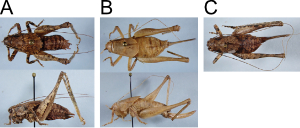
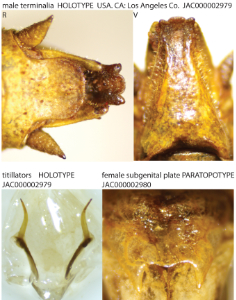
Male supra-anal plate A. conistylus, rounded and flat. A. nesiazo, square supra-anal plates. Diminutiva Group, caudally indented or heart-shaped plate. Male paraproct processes A. conistylus, internal tooth position is apical to slightly subapical A. hulodomus and A. morsei, the tooth is positioned distinctly subapically. A. nesiazo, the tooth on the paraproct process is positioned apically. Male titillator A. conistylus, arms are distinctly curved laterally and lack a notch at the base. A. hulodomus and A. nesiazo, nearly straight titillator arms. A. morsei, notch at base of titillator arms. Male subgenital plate A. conistylus, plate has a narrow apex and thick, conical styli. Other small Aglaothorax species, styli are narrow, cylindrical, and straight to curved. Female subgenital plate A. conistylus, short, triangular lateral processes. Diminutiva Group species, long digitiform processes (except for A. constrictans, which has short, triangular processes). See Key to Aglaothorax species. |
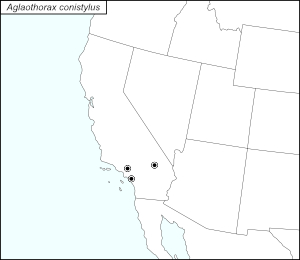
| Range: | Eastern San Gabriel Mountains and adjacent basin. |
| Habitat: | Chaparral, hillside scrub, and alluvial scrub. Found on rabbitbrush (Ericameria nauseosa) and low branches of western sycamore (Platanus racemosa). |
| Season: | Adult activiy in summer (based on few records). |
| Name derivation: | Greek: "coni" = cone; "stylus" = pillar. In reference to the cone-shaped styli on the male subgenital plate. |
| References: |
Cole et al. 2025
Cole et al. 2025 (Morsei Group) pp. 38-68 Cole et al. 2025 (species pages) pp. 41 and 57-60 |
| Nomenclature: | OSF (Orthoptera Species File Online). |
|

|