



|
|
|
|
| map | type page | id page |
| Group species: | Ovatus. |
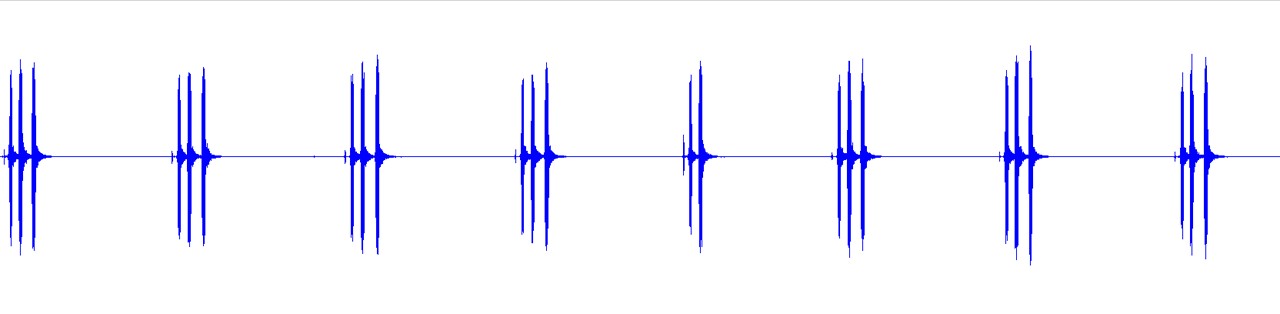
| Song: | Brief echemes (“chirps”) similar to A. armiger. Pulse trains 50±10 ms in length are repeated at a rate of 10.1±1.52 s-1. Mean peak frequency is 14.13±2.77 kHz, with peak frequencies as high as 20.25 kHz. Echemes group 3±1 pulse trains with 0.71–3.56 (mean 1.53±0.75) s of silence between echemes. |
| Identification: |
Coloration
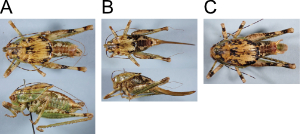
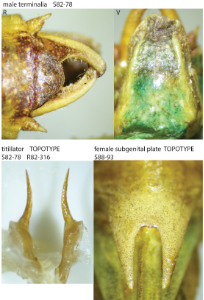
A. segnis, abundant longitudinal black streaks on the pronotal disk (similar to A. strobilion). A. armiger, typically has reduced black marking on the pronotal disk. Morphology Male supra-anal plate A. segnis, wider than long and reflexed caudally (similar to A. armiger and A. strobilion). A. giganteus, A. khioneos, A. ovatus, and A tinkhamorum, supra-anal plates are as long as wide. Male paraproct processes A. segnis, apical, mesally directed tooth; rarely, the cercus terminates in a double tooth, with one of the two teeth positioned apically. Paraproct is about 3 times as long as wide. All other Ovatus Group species, subapical ventrally directed tooth. Paraproct is thick and about twice as long as wide. Pronotum A. segnis, broad. Pronotal constriction-to-metazona width ratio of 2.24 to 2.47. A. strobilion, not as broad as A. segnis. Pronotal constriction-to-metazona width ratio of 1.97 to 2.20. Female subgenital plate A. segnis, shortest subgenital plate lateral processes of any Ovatus Group species (A. strobilion unknown). See Key to Aglaothorax species. |
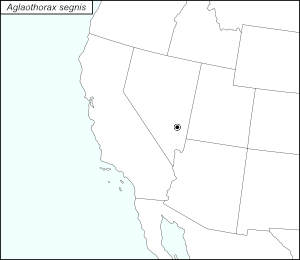
| Range: | Mountain ranges of southeastern Nevada at high elevation. |
| Habitat: | Pinyon-juniper woodland. Taken from high branches of Utah juniper (Juniperus osteosperma). | Season: | Adults middle to late summer. |
| References: |
Cole et al. 2025
Cole et al. 2025 (Ovatus Group) pp. 16-38 Cole et al. 2025 (species pages) pp. 17 and 28-30 |
| Nomenclature: | OSF (Orthoptera Species File Online). |
|

|